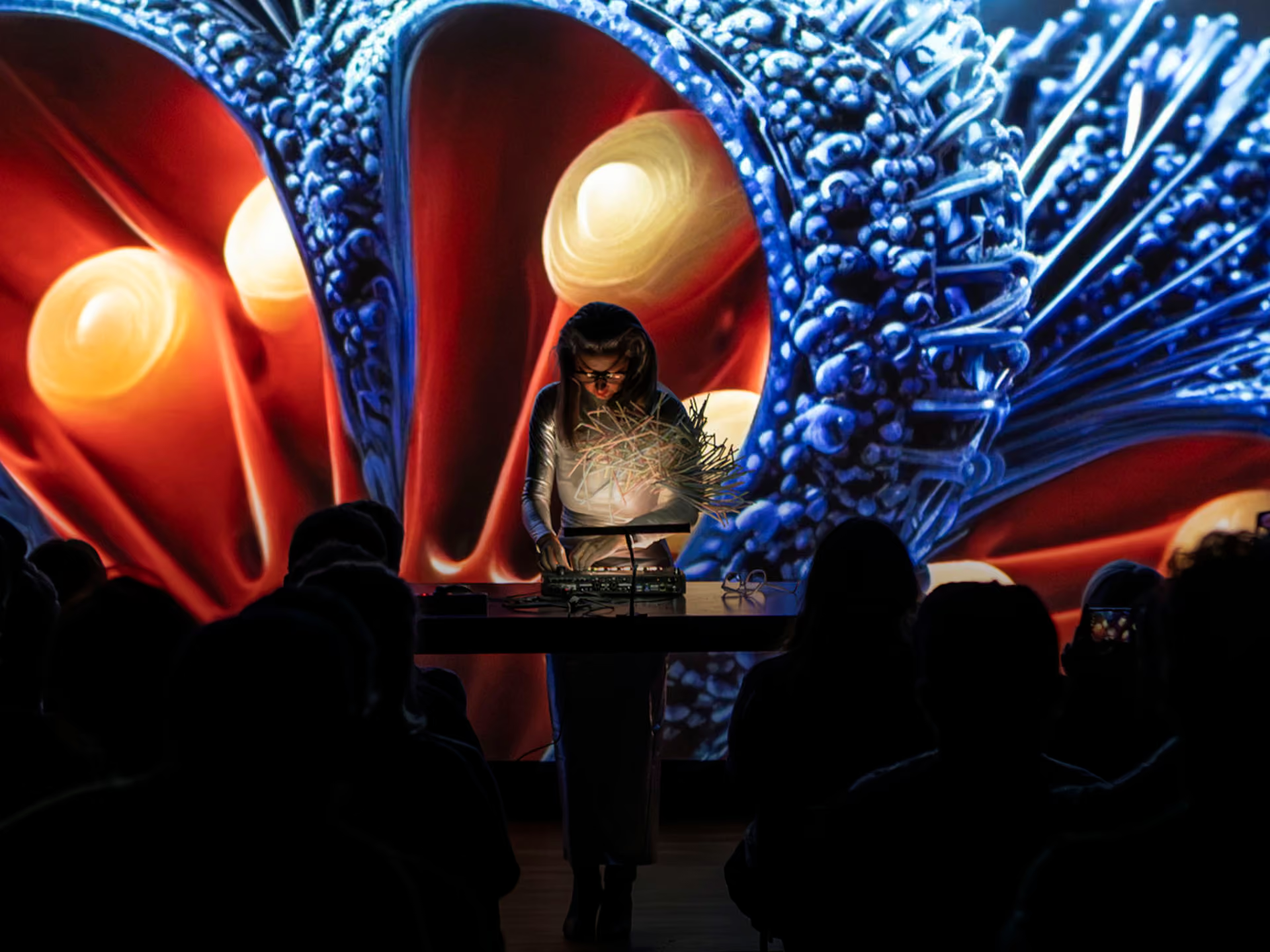
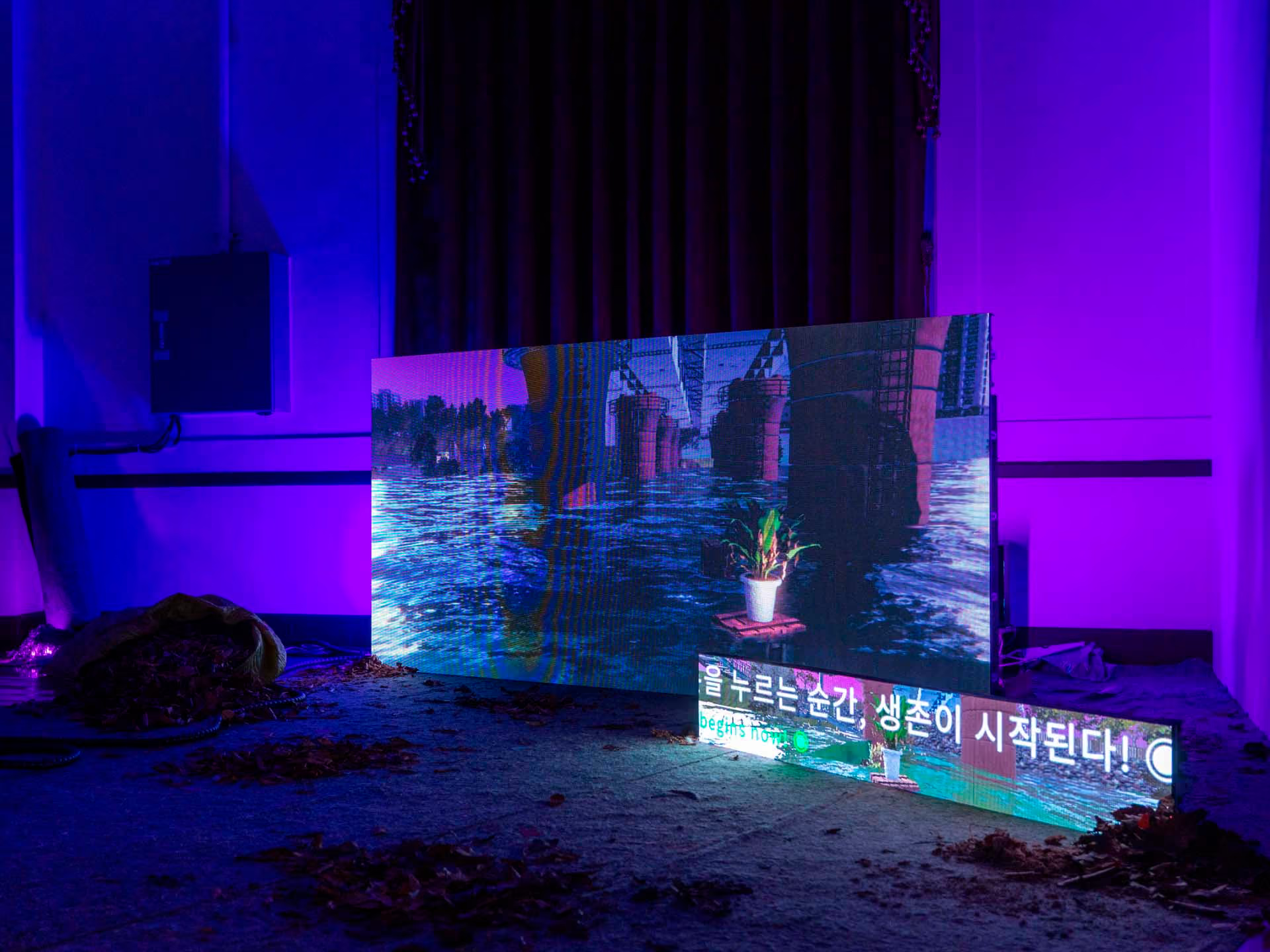
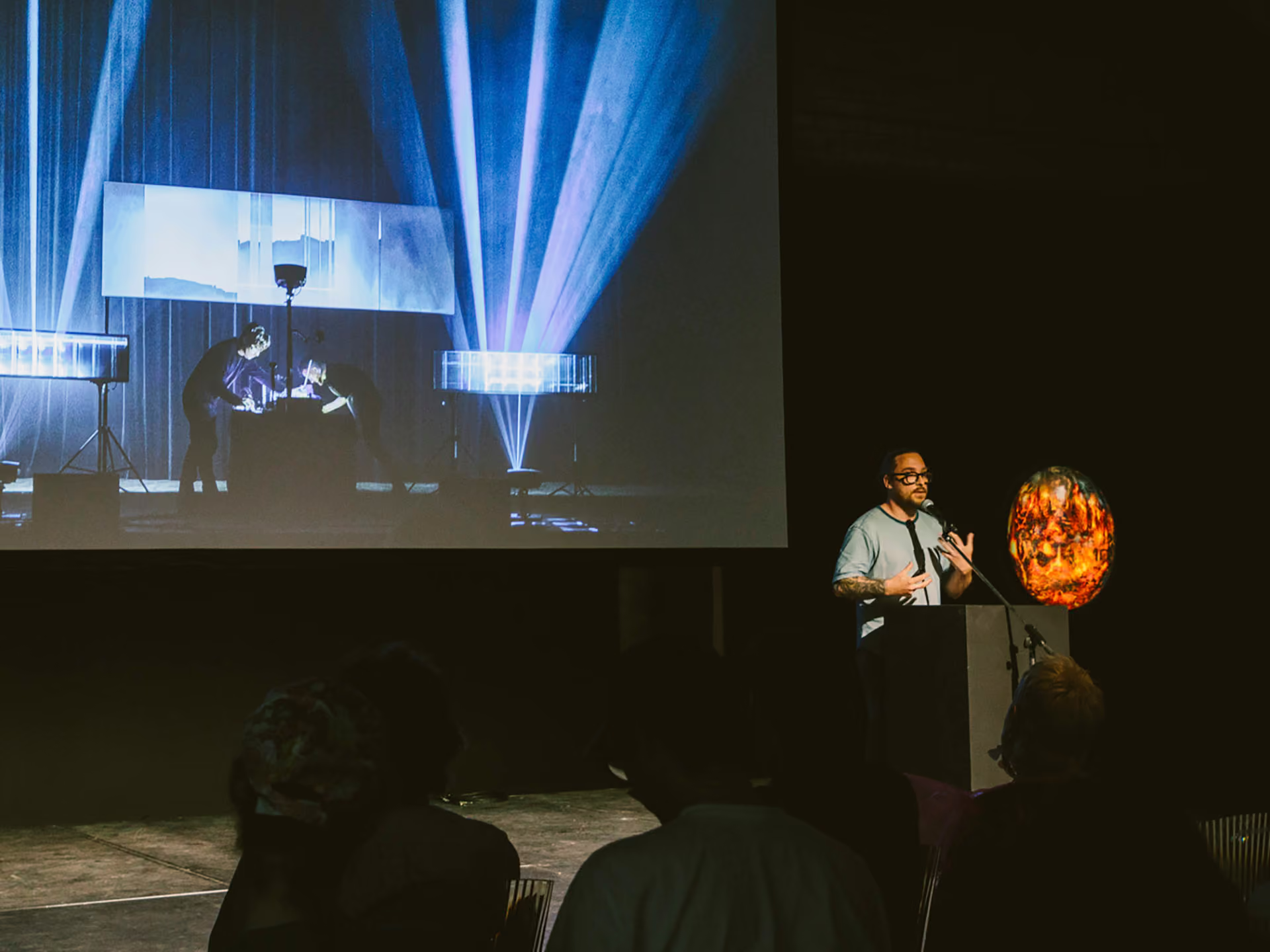
The Metamonument exhibition is a follow-up to the Métacrise project recently presented at Art Mûr gallery. Gathering various bodies of work, the project shone a light on the “metacrisis” phenomenon: a situation wherein climate, colonial, economic and political challenges are interlinked and mutually reinforced amid the inner workings of a global capitalist framework. With this same interlocking system in mind, British philosopher Timothy Morton calls the climate crisis a “hyperobject,” evoking the expansive and unfathomable ramifications that tension it and stem from seemingly disparate yet very much connected events. In response to these systemic concerns, Metamonument brings appropriation and remix into play to advance a collective subversion of dominant discourses imposed by physical and virtual monuments.
Generally fashioned from durable materials such as bronze, granite and marble, traditional monuments have fulfilled the historical functions of commemorating important people, namely political figures in power, and of glorifying dominant societal values. Similarly, tech giants condition the digital sphere in accordance with certain preestablished mechanisms dictated by the values of the existing capitalist order. These monuments, constructed by governments in power and by leading corporations, privilege a hegemonic vision of societal values, aligning these with an extractive relationship to human and environmental resources.
In contrast with traditional physical monuments that maintain a fixed location, online monuments such as web platforms, websites, and files can be endlessly multiplied, pirated, and shared by users. This kind of circulation and movement degrades the quality of images as they are compressed, copied, and remixed. The recycling of digital content and the deterioration that arises from it then cause each image to drift from the intent of their original author, in so doing troubling their authority and the privatization of the soapbox—a phenomenon Hito Steyerl, among others, theorized in his work In Defense of the Poor Image. As such, in a similar manner as the vandalization of commemorative statues, the sharing and recontextualizing of so-called poor images chips away at the authority of big web platforms, thereby subverting conventional narratives.
In their far-reaching and interconnected nature, these networks for sharing run alongside Morton’s “hyperobject” concept, reminding us that reality is altered by relational means, not by a unique vision or an isolated action. As they “reedit historical or ideological narratives, inserting the elements that compose them into alternative scenarios” (Bourriaud, 2002), the collective and artists deprivatize the status of authorship and reform dominant ideologies. In so doing, they free themselves from the passivity of the masses in favour of collective interactions, of decentralized cocreation that refigures “making with” as a way for emancipation to take shape.
Bibliography
Bourriaud, N. (2004). Postproduction : la culture comme scénario : comment l’art reprogramme le monde contemporain. Presses du réel.
Morton, T. (2013). Hyperobjects: Philosophy and Ecology after the End of the World. University of Minnesota Press. http://www.jstor.org/stable/10.5749/j.ctt4cggm7
Schonig, J. (2022). Hito Steyerl’s «In Defense of the Poor Image» [Vidéo]. Film & Media Studies. Youtube. https://www.youtube.com/watch?v=-XaIEJeR8Sc
Stengers, I. (2019). Résister au désastre. Wildproject
This text was written by Roxane Lafrance to accompany Oli Sorenson's exhibition "Metamonument", on view from January 16th to February 28th at the ELEKTRA Gallery.