Elektra

About
Based in Montreal, ELEKTRA is an organization dedicated to showcasing artists and works that bridge contemporary art and new technologies, rooted in current research and experimental aesthetics. ELEKTRA presents artists both locally and internationally, while fostering connections between artists, researchers, and the public through new forms of expression.
Festival
As ELEKTRA's flagship event, the festival has showcased audiovisual, immersive, participatory, and robotic performances annually since 1999. The festival also hosts the International Digital Art Market, designed to foster connections between curators and artists.
BiennIal
Every two years in Montreal, the ELEKTRA Biennial brings together artists whose work embraces or critiques technological advancements, offering a panoramic view of the trends shaping our relationship with the digital world.
Exhibition
Located in the heart of the Mile End, the ELEKTRA Gallery is nestled within a creative hub, surrounded by a vibrant artistic community. Each year, it hosts 4 to 5 free exhibitions that highlight current issues and showcase emerging talent from Quebec.
International
On the international stage, ELEKTRA supports artists in their search for exhibition venues and organizes events to promote Quebec and Canadian digital art around the world.
VIrtual museum
Launched in 2020, the ELEKTRA Virtual Museum has evolved through several iterations, the most recent being a collective virtual reality experience featuring an inaugural exhibition that showcases artists from Quebec.
Team
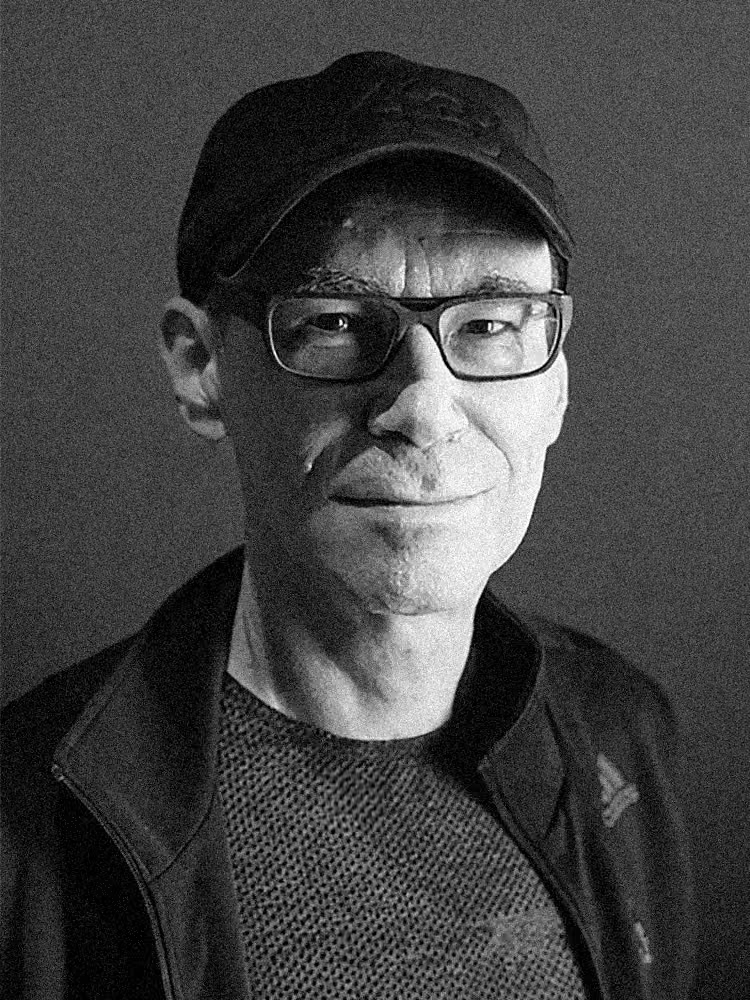
Alain Thibault
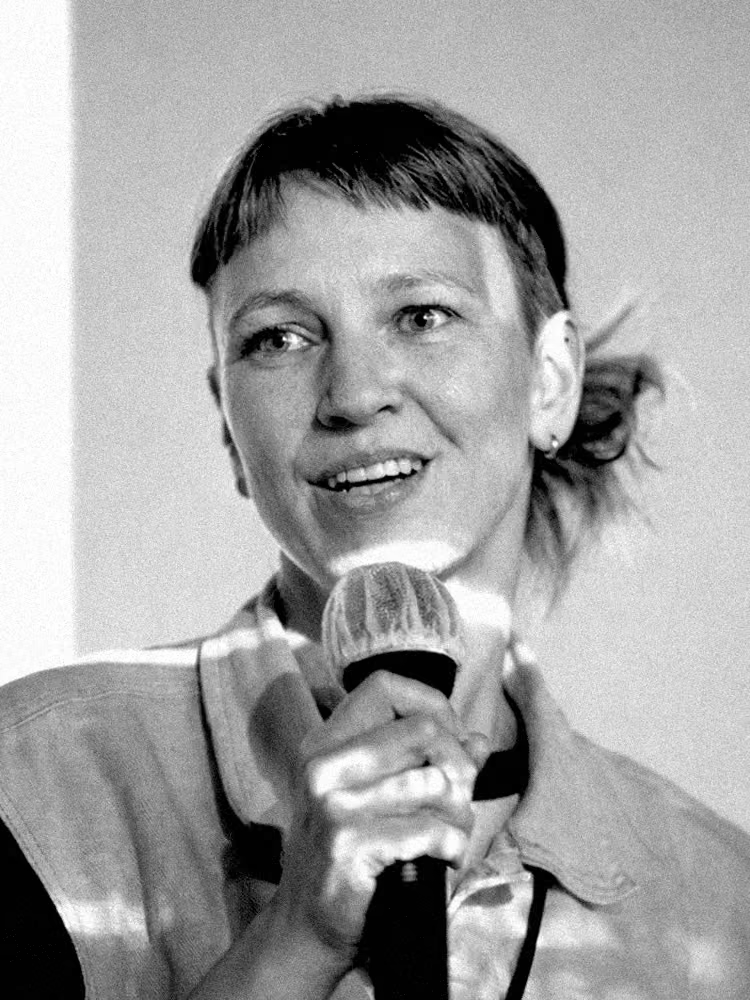
Ida Toft

Mathis André

Roxane Lafrance
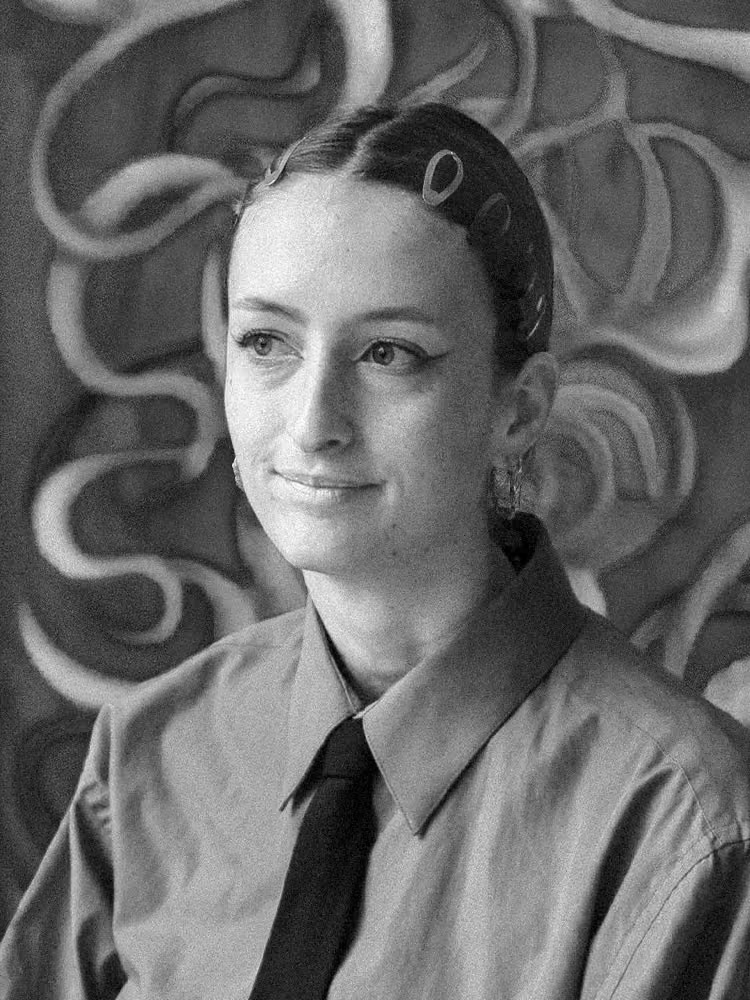
Inès Legrand
Board of Directors
President: Vincent Brie
Vice-President: Alain Thibault
Treasurer: Stéphane Landry
Secretary: Carole Bouchard
Administration: Daniel Fortin and Chanèle Dumontier
Histoire
1978: ACREQ, a pioneer in electroacoustics
The ACREQ (Association pour la création et la recherche électroacoustique du Québec) was founded in Montreal in 1978 by Yves Daoust, Marcelle Deschênes, Michel Longtin, Philippe Ménard, Jean Sauvageau, and Pierre Trochu. It was the first Canadian organization independent of any university to work exclusively in the field of electroacoustic music. In 1993, Alain Thibault was appointed as its artistic director.
1999: ELEKTRA, first festival
In 1999, ACREQ merged all of its activities (Les Printemps électroacoustiques, the Clair de terre concerts, etc.) into a single annual event: the first edition of the ELEKTRA festival. Following current trends, the non-profit organization shifted its focus toward digital arts as electronic music became more mainstream.
2007: professional meetings
Building on its success, ELEKTRA organizes the first edition of the International Digital Art Market (MIAN) in 2007. The event brings together producers and curators from around the world to discuss issues related to the future of digital art. It also serves as a unique opportunity for networking and developing collaborative projects.
2012: The Digital Art Biennial
Driven by a desire to democratize digital arts, which were still relatively unknown to the general public, ELEKTRA launched the Montreal International Digital Art Biennial (BIAN) in 2012. Whether embracing or rejecting technological progress, the artists and works presented offer a panorama of current trends and explore our evolving relationship with the digital world. International curators are invited to co-curate these grand-scale exhibitions, representing countries such as Germany, France, South Korea, Switzerland, Belgium, and Japan.
2019: The gallery in the Mile End
In 2014, ELEKTRA moved into new offices at 5445 de Gaspé Avenue in the Mile End. This space, known as "Le Pôle de Gaspé," is a repurposed former textile factory managed by the artist collective Pied Carré. In 2019, ELEKTRA opened a ground-floor gallery to showcase emerging talent from Quebec. Exhibitions are free and focus on current events.
2020: The Virtual Museum
Closed due to the COVID-19 pandemic, the 5th edition of the ELEKTRA Biennale, “METAMORPHOSIS,” launched online as a browser-accessible project. In June 2022, a more comprehensive version was developed using Unreal Engine to be played on a laptop. In May 2025, the virtual reality version was unveiled. The experience is now collective and can be deployed in various locations.