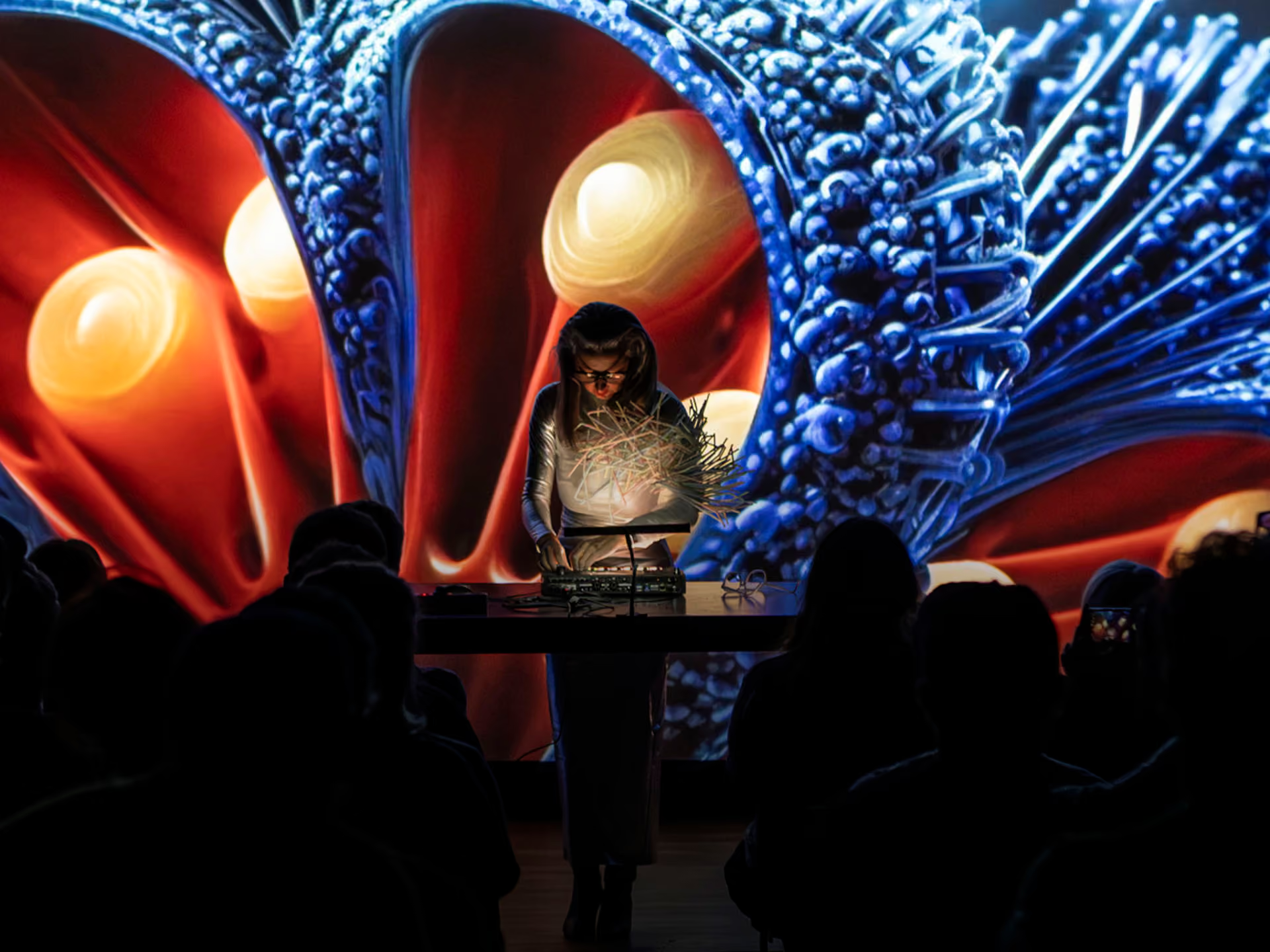
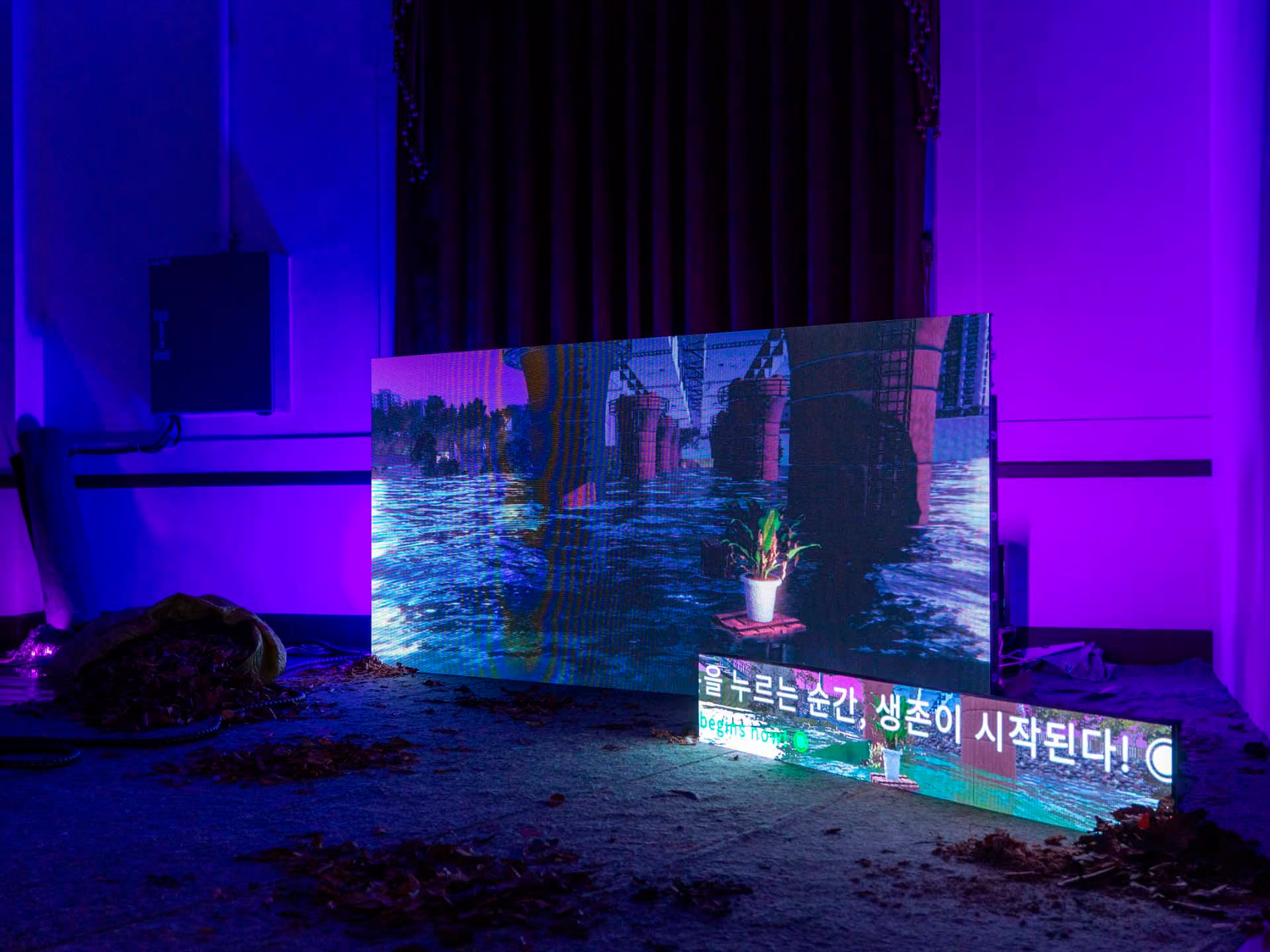
With the most recent developments in artificial intelligence, numerous hyperrealistic image-, sound- and video-generating applications have enabled an impressive proliferation of artificially generated content across the internet, destabilizing the established relationship between authenticity and images along the way. While the post-truth era is primarily associated with the rise of disinformation on social media and the sensationalism of American electoral politics, this period is also unmistakably marked by the rise of these technologies, where telling reality apart from fiction is a growing challenge.
In troubling the factuality of images, this phenomenon compels us, more than ever, to develop a comprehensively critical spirit with regards to the media content we consume and to interrogate the degree of cultural and technical construction it represents, whether it be artificially generated or not. Indeed, every optically captured image is influenced by the technical limitations of the instrument used and the socio-cultural context within which it was produced. With those ramifications in mind, studies pertaining to visual culture consider the analysis of media images “a tool for political action that aims to reveal the lingering presence of ideology, of inflexible and vertically imposed identities, and of rationales for inclusion and exclusion that conceal, under the guise of the natural and self-evident, an artificial construction” (2022, Pinotti, Somaini).
In the case of prompt-based image-generating software that utilize the CLIP system, such as Dall-E and Stable Diffusion, the images are created using what we call latent space. This refers to a computing structure wherein web data is reduced to the essential and simplified in order to enable the AI to navigate, select, and generate the images the user requested while avoiding overly lengthy calculations (Chatonsky, 2024). In such a space, images are reduced to pixel units and grouped under various categories, such as bird, people, close, or distant, depending on their degree of association with these terms on the web, including, notably, in replies under posts and tags. This way, artificially generated images stem directly from media images and their association with certain descriptions, reflecting the biases, conventions, and stereotypes already present in online content.
In other words, with already culturally constructed web images associated with biased terms as its raw material, the fabrication process of generated images reveals the conventions and ideals hidden within media images, a good reminder to foster a critical spirit toward all forms of content. In a sense, artistic propositions generated by AI can therefore be understood to present realities that center our conventional habits, while also offering up a tool for speculating on possible and alternative worlds.
Bibliography
Pinotti, A., Somaini, A., Burdet, S., & Aubry-Morici, M. (2022). Culture visuelle : images, regards, médias, dispositifs. Les presses du réel.
Ménard, F., & Renaud, J.-F. (2025). Le projet Weird Press Photo : l’intelligence artificielle générative comme outil subversif et la notion d’authenticité en photographie [Dissertation, Université du Québec à Montréal]. http://www.archipel.uqam.ca/18610/
Grégory Chatonsky, Christian Joschke et Antonio Somaini, « Disréalismes », Transbordeur [En ligne], 7 | 2023, mis en ligne le 01 octobre 2024, consulté le 15 octobre 2025. URL : http://journals.openedition.org/transbordeur/1169 ; DOI : https://doi.org/10.4000/12gxn
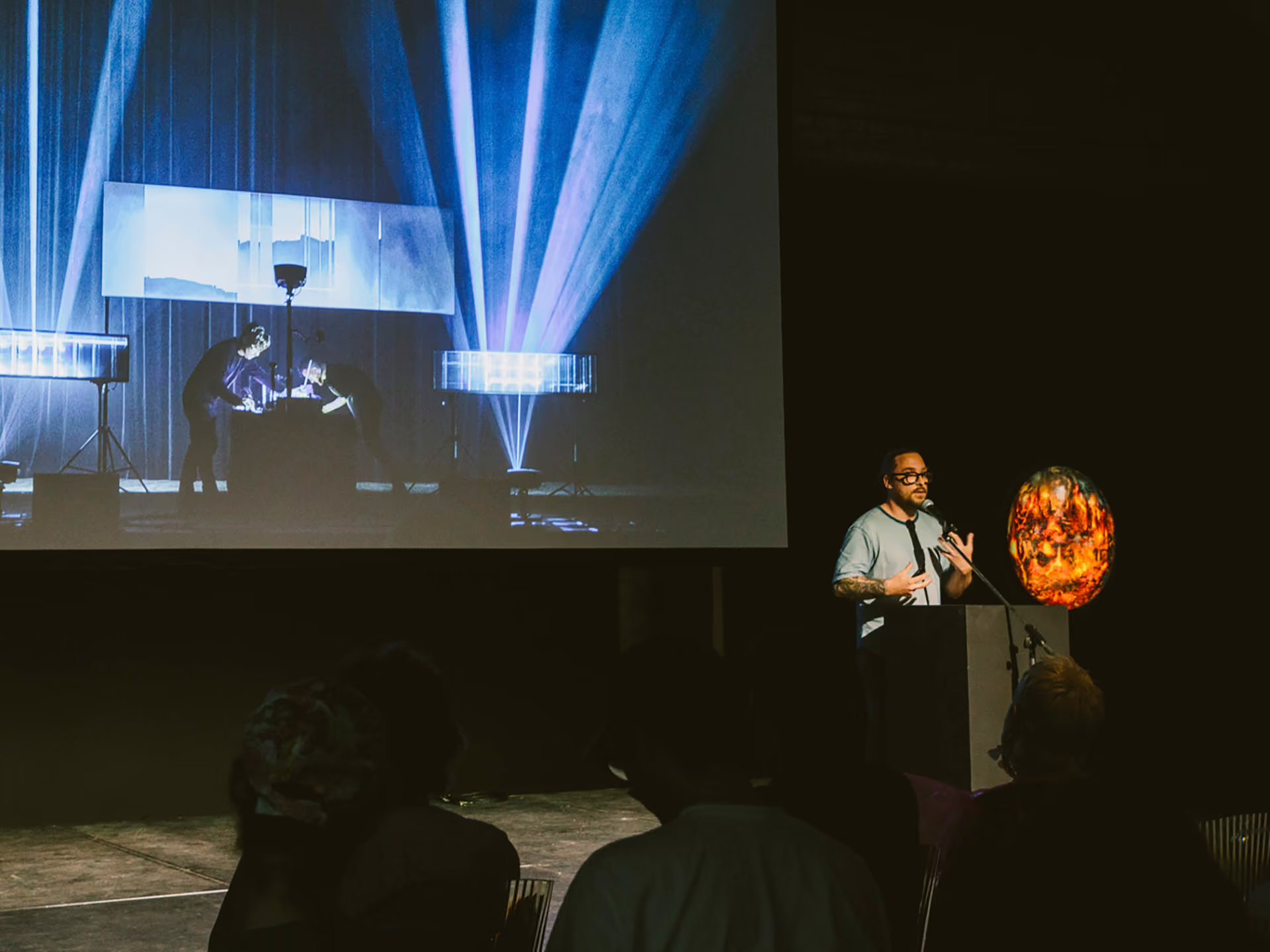
This text was written by Roxane Lafrance to accompany the exhibition “Latent Spaces,” on view from November 6 to December 13 at Galerie ELEKTRA.