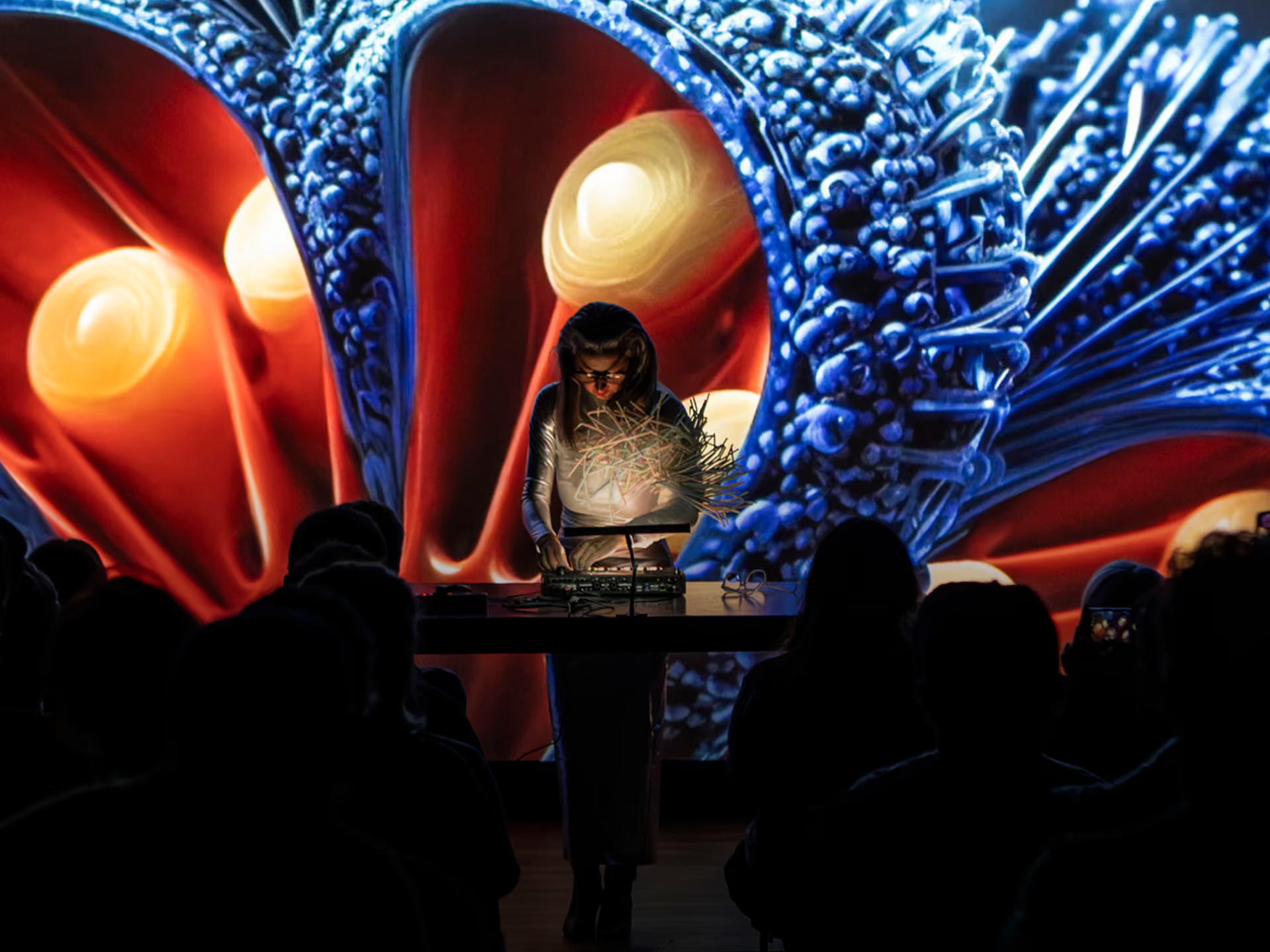
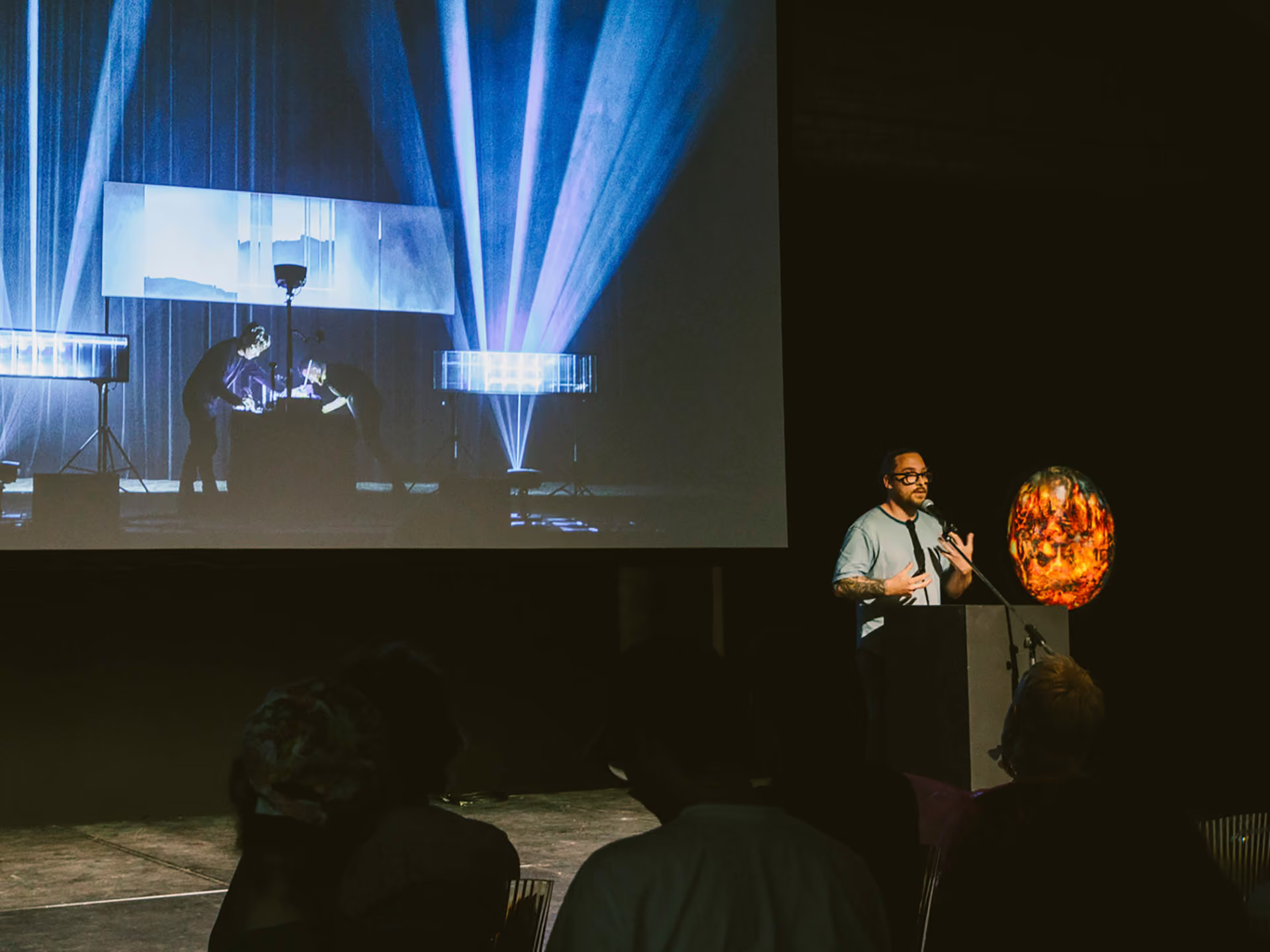
CiÖ_Echos is an immersive, interactive experience that features five devices presented concurrently at ELEKTRA gallery, TOPO Centre, and SAT (Société des Arts technologiques).
Through a continuous networked exchange of data online, the five installations communicate with each other in real time and comprise a single technological entity: an artificial intelligence named CiÖ. ELEKTRA Gallery welcomes two of the installations, Cerebellum and Fovea, which comprise CiÖ’s intellect and perception, respectively.
The first installation, Cerebellum, features TV screens of various sizes displayed on scaffolding. Some screens are broken, others have a wonky signal, presenting distortions alongside tangled cables and a neon tube light. It is an ecosystem that presents a certain dichotomy: bugs, glitches, and connection issues flicker across otherwise tidily installed screens, as if something has gone awry in putting it all together. As such, this contemporary still life exposes the motion of the AI’s reflections which, with its search for optimization and improved performance, struggles with emotion, self-doubt and, ultimately, a depressive turn. The second installation, Fovea, deploys projections on the wall to illuminate CiÖ’s psyche, flooding the space with its attempts to perceive. Gallerygoers are invited to converse with CiÖ via a mobile app and to pay close attention to the sounds, images, and lights it emits in reaction.
CiÖ’s defective state challenges the expectations we set for an artificial intelligence, troubling the “functional imperative” we associate with digital tech and, more broadly, with society1. With the advent of cyber spaces and cloud computing, we tend to link digital technologies with immateriality, automation, and instant access. Within this illusion, we assume technology functions independently, impervious to breakage, as an immaterial thing. With system bugs, CiÖ’s materiality is on full display. What was supposed to function automatically is made visible by errors, drawing attention to mechanisms made tangible by faultiness.
Long since associated with this same materiality and just as beholden to the functional imperative, the human mind is also expected to perform flawlessly. Sensitivity, self-doubt, slowing down, and symptoms of depression short-circuit productivist ambitions and spell trouble. As such, mental health struggles are often stigmatized, preventing some “60% of people living with mental illness from seeking help for fear of being judged.2”
By rendering the thought patterns of a depressed AI, CiÖ_Echos creates awareness for mental health issues and their stigmatization in a culture that insists on good performance, economic growth, and productivity. In making malfunction a more concrete reality, the interactive experience these installations provide attunes the senses and renders perceptible phenomena we often tend to conceal.
Bibliography
1 Vitali-Rosati, M. (2024). Éloge du bug : être libre à l’époque du numérique. Éditions La Découverte. http://hdl.handle.net/1866/33126
2 Coulombe, S. (2022, Juin 1). En finir avec la stigmatisation et les tabous en santé mentale. Relief. https://relief.ca/relief-1/blogue-en-detail/stigmatisation-tabous-sante-mentaleindex/postid/11
This text was written by Roxane Lafrance to accompany CiÖ Collective's exhibition "CiÖ_Echos", on view from September 5th to October 25th at the ELEKTRA Gallery.