''Noise'' Exhibition
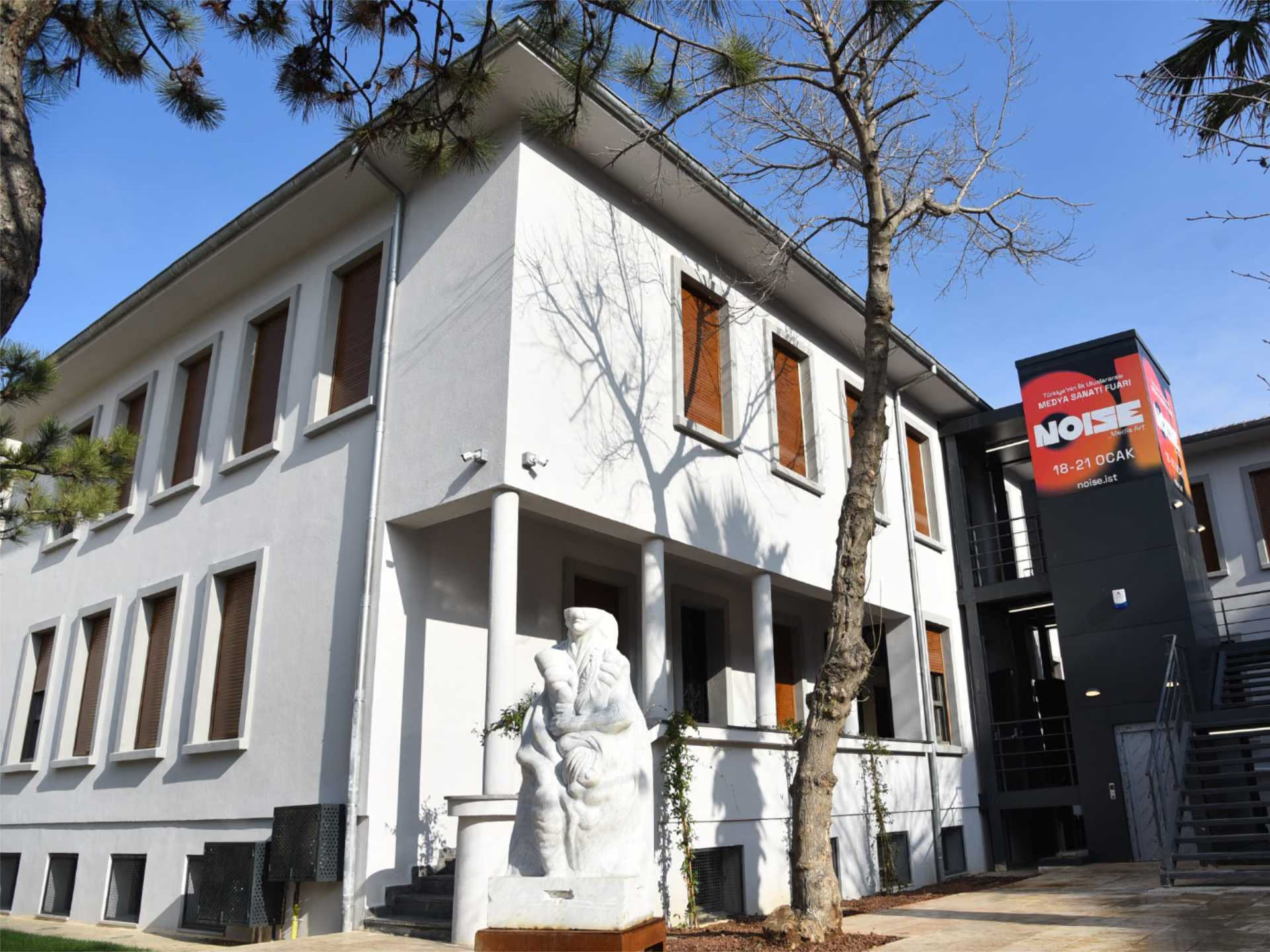
ELEKTRA promotes the work of seven Quebec digital artists at Noise Media Arts, Istanbul, with an exhibition in the Kadıköy Museum and one evening of live performances at the Alan Kadıköy theater.



Overview
Information
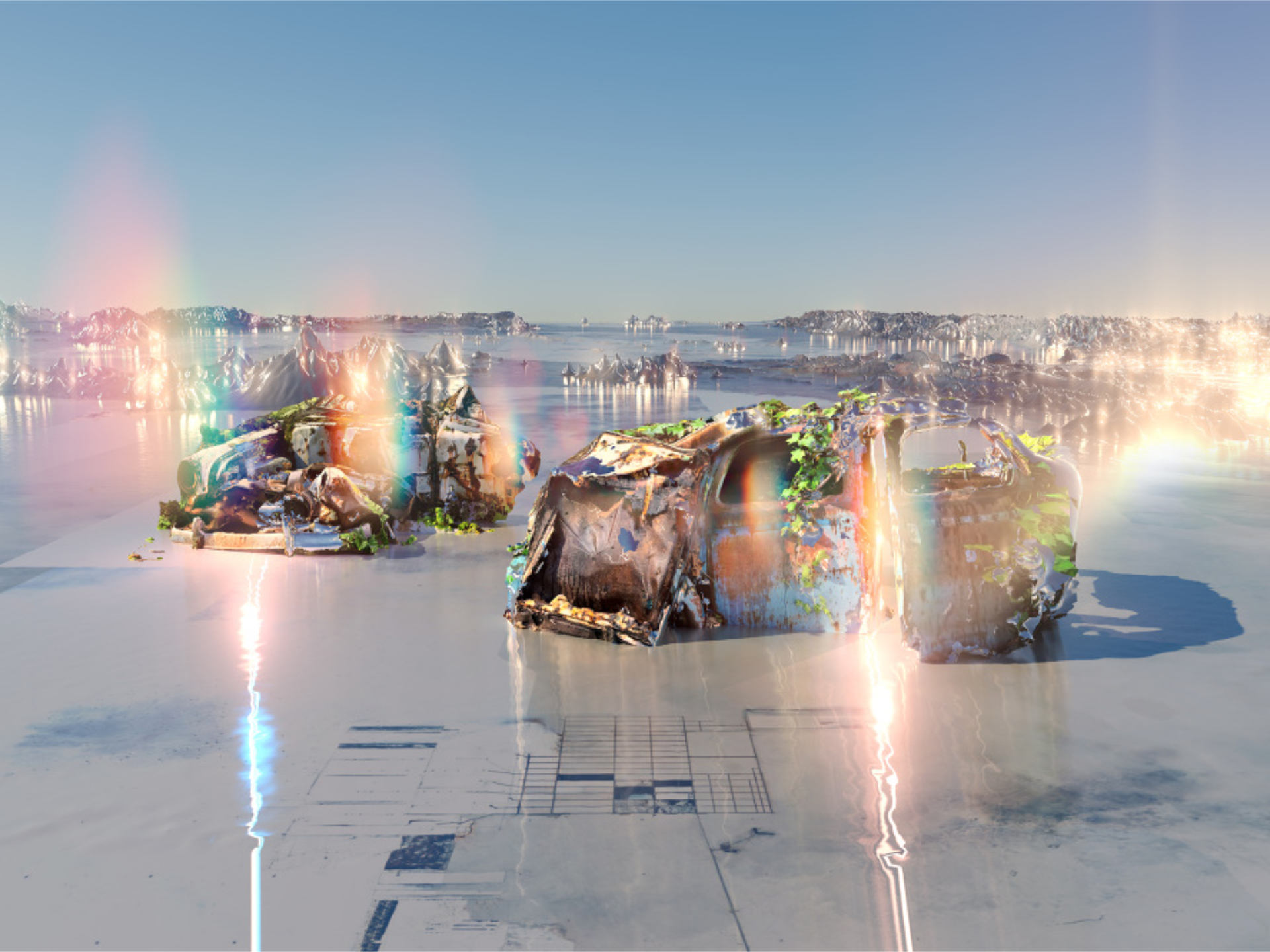
Objets-monde, 2022, interactive installation, Sabrina Ratté
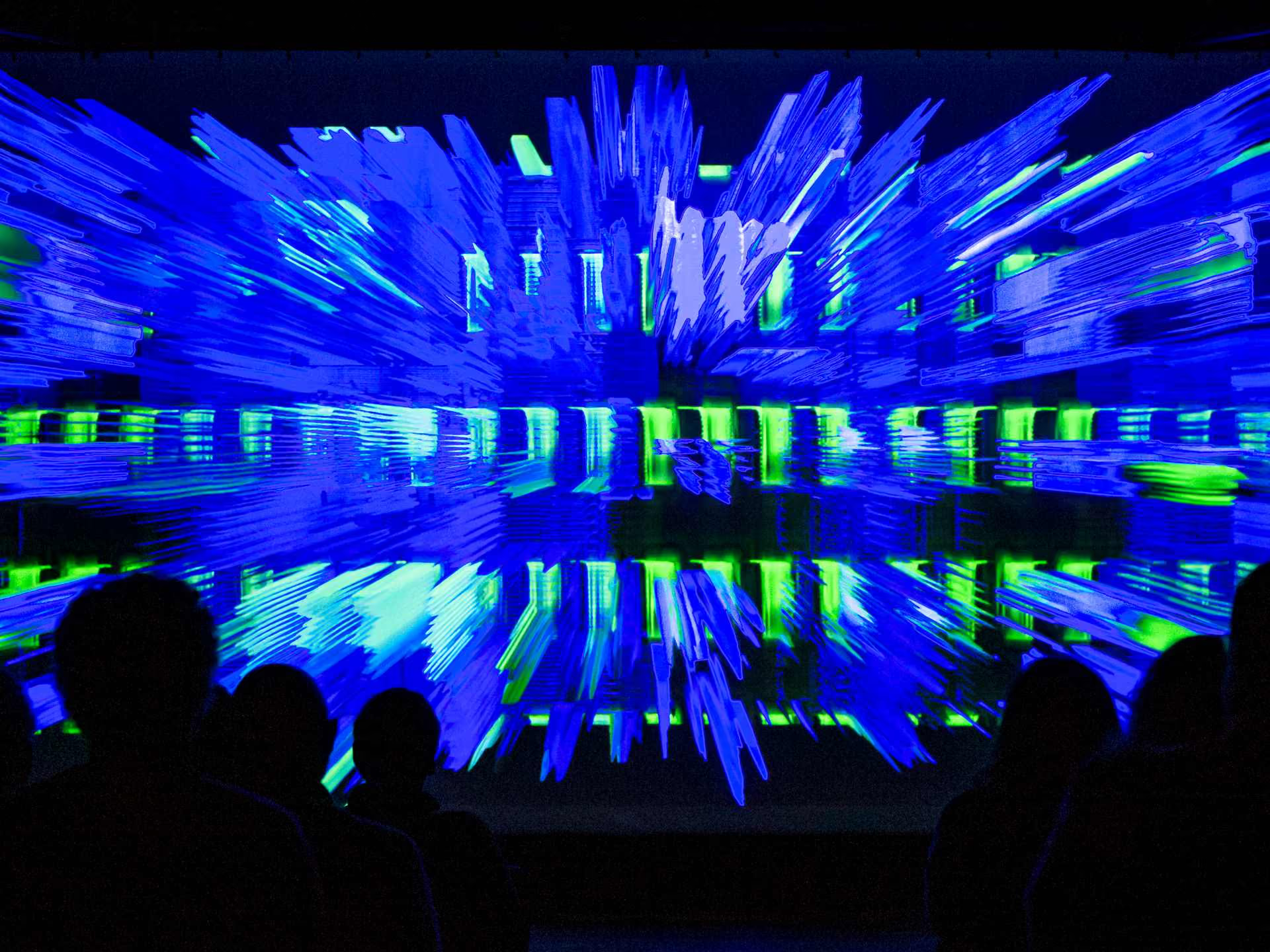
Objets-Monde is interested in the traces that humans leave on the environment as well as the way in which these become an intrinsic part of our ecosystem. Abandoned objects, such as cars and computer screens, were captured with the help of photogrammetry to create a video collage composed of extracts from reality. These objects are then recontextualized in the video, appearing disproportionately large within distant landscapes, resembling the remnants of monumental architecture. The absence of life as well as the luminous atmosphere of the work create a tension between apocalyptic feeling and nostalgia, between precious objects and waste, between idealized nature and the indelible presence of human traces. These vestiges of the Anthropocene are deployed within an interactive installation in collaboration with Guillaume Arseneault, and a soundtrack composed by Roger Tellier-Craig.
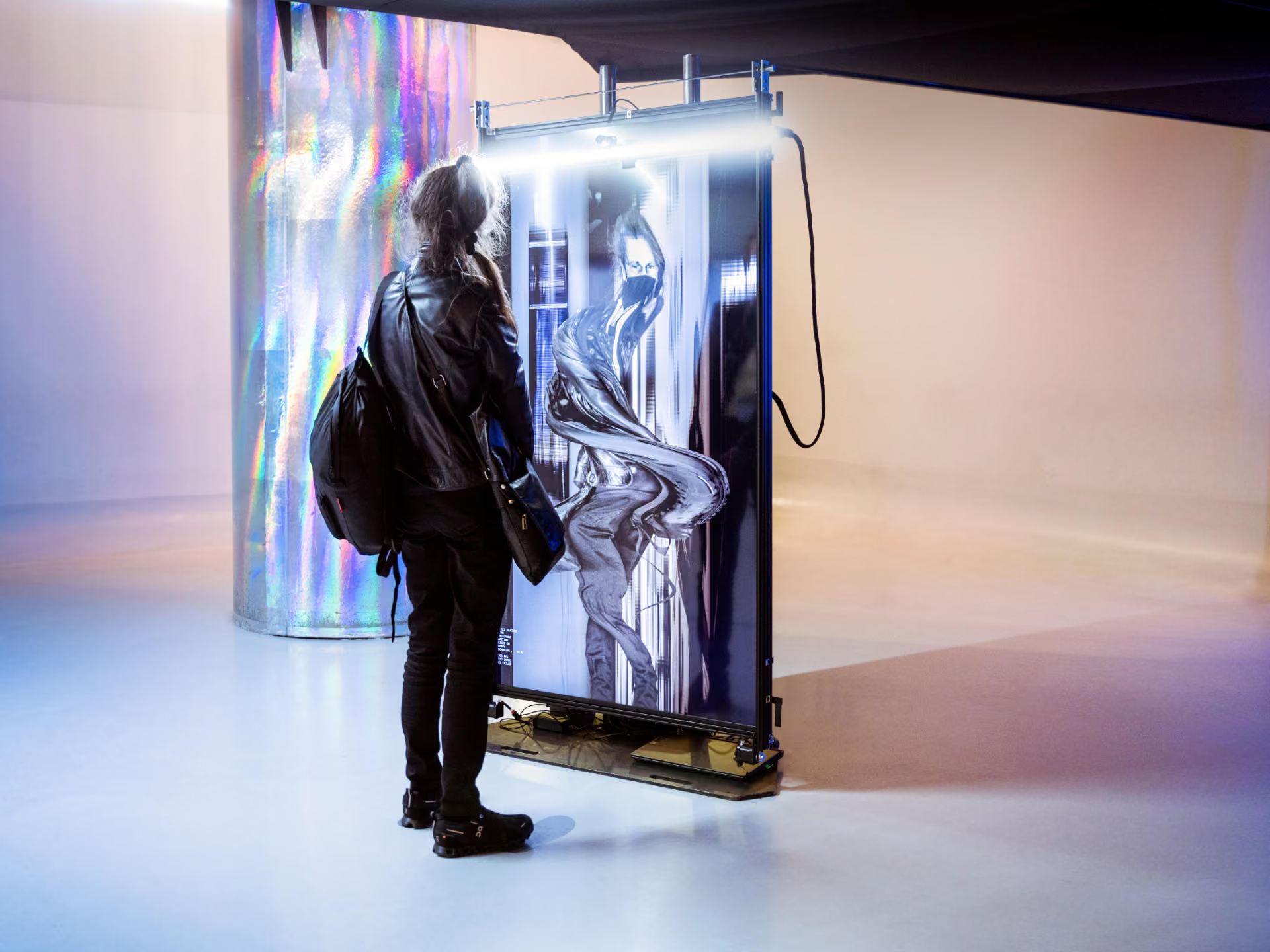
Veillance, 2023, interactive installation, Louis-Philippe Rondeau
Veillance is an interactive installation that performs a full-size scan of individuals on a large screen, making an inventory of all the people it has interacted with in a vast mosaic. Originating from Steve Mann, the concept of veillance represents the state of mutual scrutiny that arises between citizens and institutions, each constantly snooping on the other. As we contemplate the scanned images of other individuals, Veillance captures our portrait and adds it to its archive. However, due to the nature of the scanning process, we can evade capture via our gestures, altering our appearance over time and thereby hijacking the scanography process.
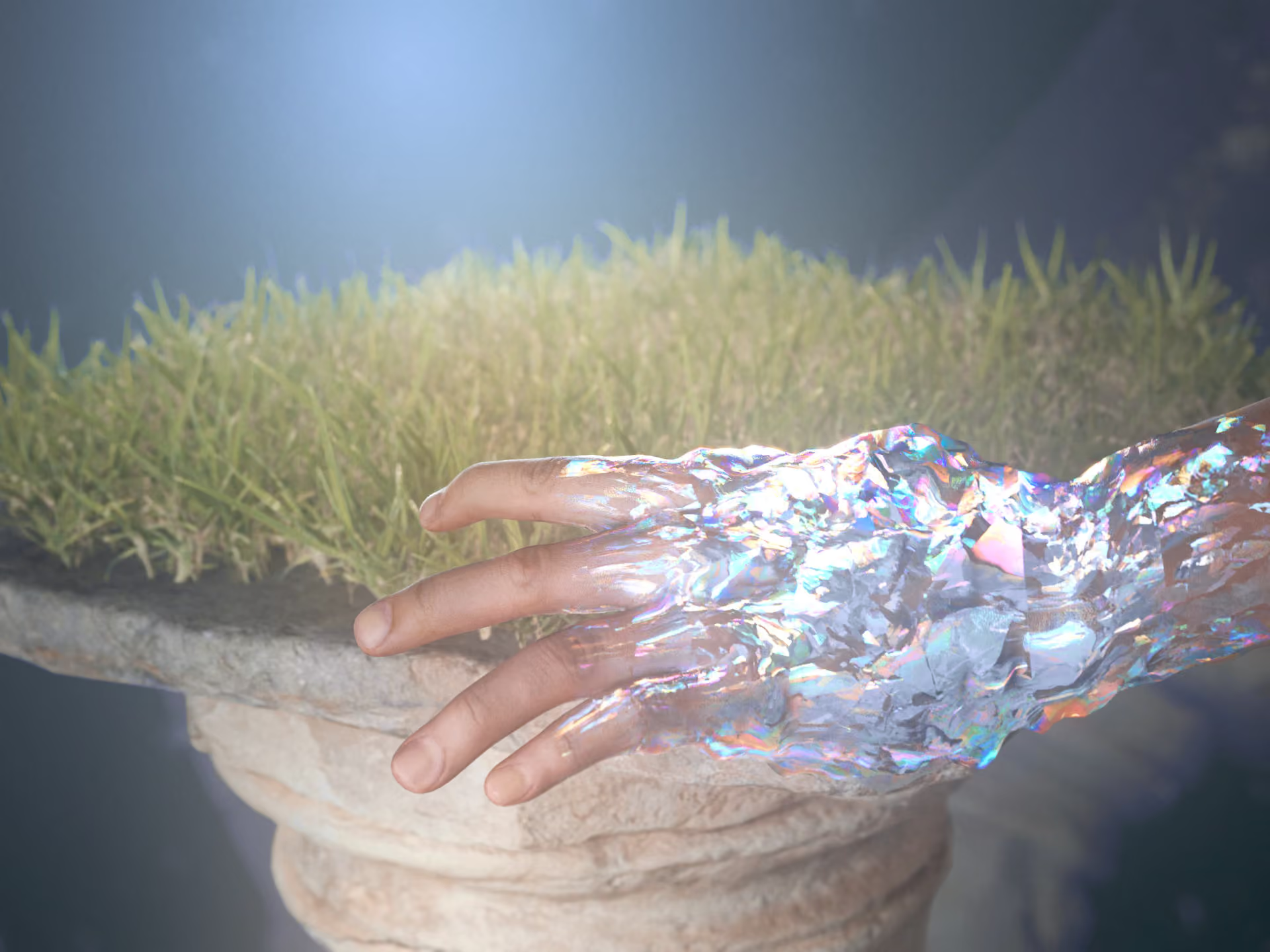
Touching grass, 2023, signal channel video, Baron Lanteigne
2023-08-13_touchingGrass is part of a series of video recordings of real-time performances with virtual environments. Using motion capture in conjunction with game engines, Baron Lanteigne examines technological resistance, creating moments of ambiguity and imperfection. This on-going process questions the ergonomics of technology and the contortions we undergo upon interacting with it. Developing custom tools for this purpose, plays an essential role here; technical faults, limitations and other unexpected deviations in digital media become an integral part of the aesthetics of the artwork.
The work 2023-08-13_touchingGrass utilizes this not only on a visual level, but also on a content level. Touch Grass is a colloquial expression used in online and youth culture. It can be understood as an invitation to detach oneself from digital life and make real contact with nature; or used in a humorous or ironic way to indicate that someone is spending too much time online and needs a break outdoors. The aesthetic appearance of the visual worlds conveyed by his work does not suggest a relaxing contact with nature; the imagery appears cold, uncanny.
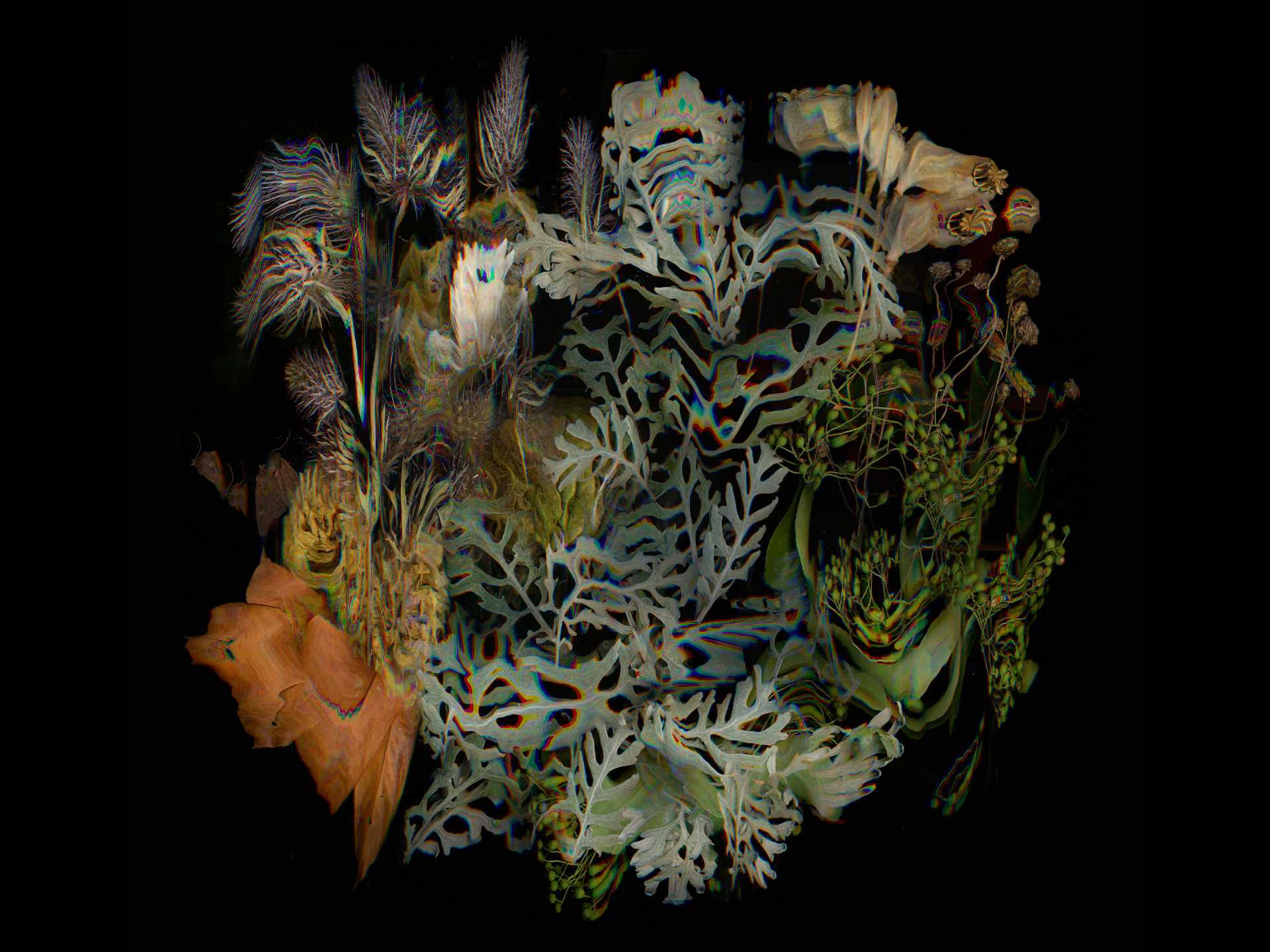
Seven sisters national park series, 2017 & 2019, videoworks (loop), Katherine Melançon
The series reference the Seven Sisters National Park on the south coast of England, seven chalk sea cliffs which the artist visited in 2013. This video series seeks to translate the uncanniness of the place; mountains and shores made of chalk that the sea erodes with its come and go but also the flora and fauna that surrounds it and inhabit it. The slowness is characteristic for Melançon’s work, the works impose a slowing down to mimic the rhythm of plants and to reward the gaze that looks with attention.
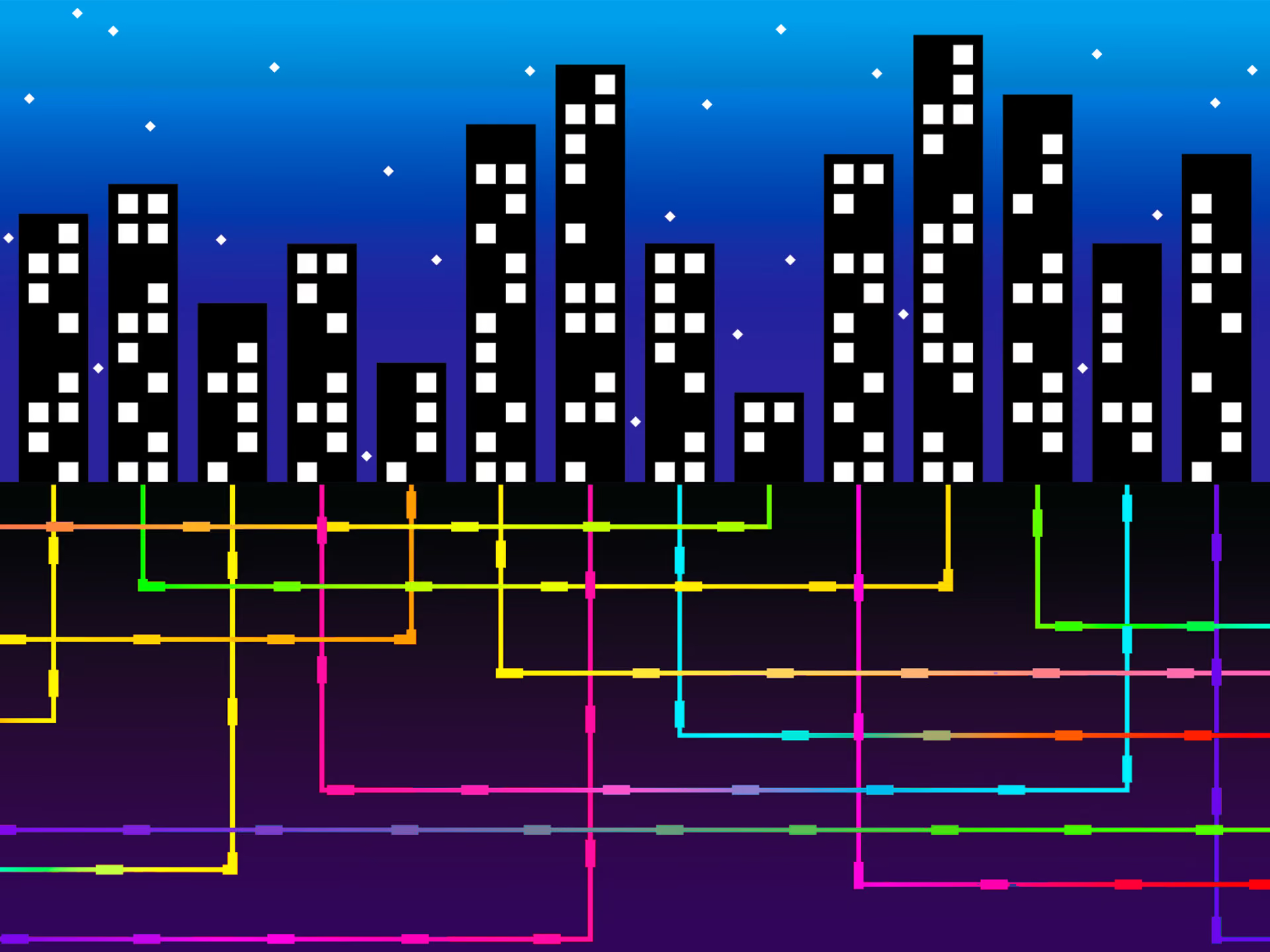
Supply chain, 2020-2021, three-channel video, Oli Sorenson
Supply Chain is a sequence of animations composed of simple geometric shapes in extremely vivid colors. Created in a hybrid style, this video recalls the square layout of Instagram, the pixelated landscapes of Minecraft as much as the works of American painter Peter Halley. Sorenson’s images thus feature a multitude of scenes, both abstract and figurative, to illustrate the ubiquity of networks that exert control over our social relationships. Among these fiber optic matrices that feed the global digital economy, the artist tries to interweave other networks: roads, shipping lanes, pipelines, electrical cables and sewers, and the atmosphere saturated with WiFi and Bluetooth signals, in addition to carbon pollutants and pesticides. These conduits and many others contribute to an acceleration of consumption flows at the heart of contemporary societies, particularly through the rapid obsolescence of technological devices.
Credits
Chief Curator, Dominique Moulon
With the support of the Bureau du Québec à Séoul.
Venue
Kadıköy Museum